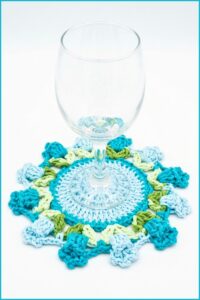
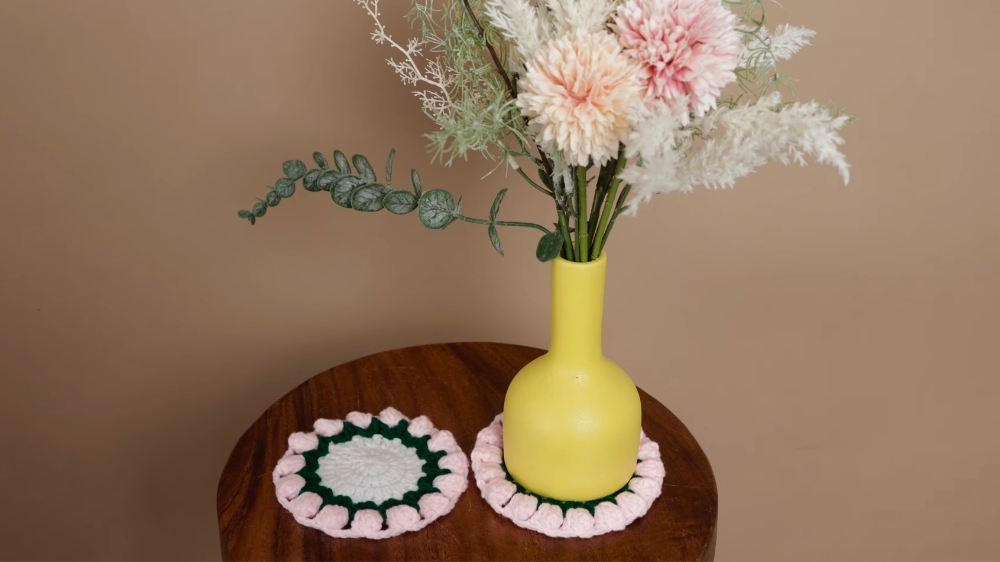
Brighten your table with the Crochet Tulip coaster pattern, adding charm, elegance, and a touch of floral beauty to every setting.
Beloved for their timeless charm, have a way of bringing warmth and cheer into any space. Inspired by these elegant flowers, the crochet tulip coaster is not only a functional item for your tableware but also a delicate piece of décor brimming with character and artistry. These coasters are ideal for adding a splash of seasonal flair to your home, evoking the freshness of spring and the beauty of handmade delight.
Graceful Crochet Tulip Coaster for Coffee Moments
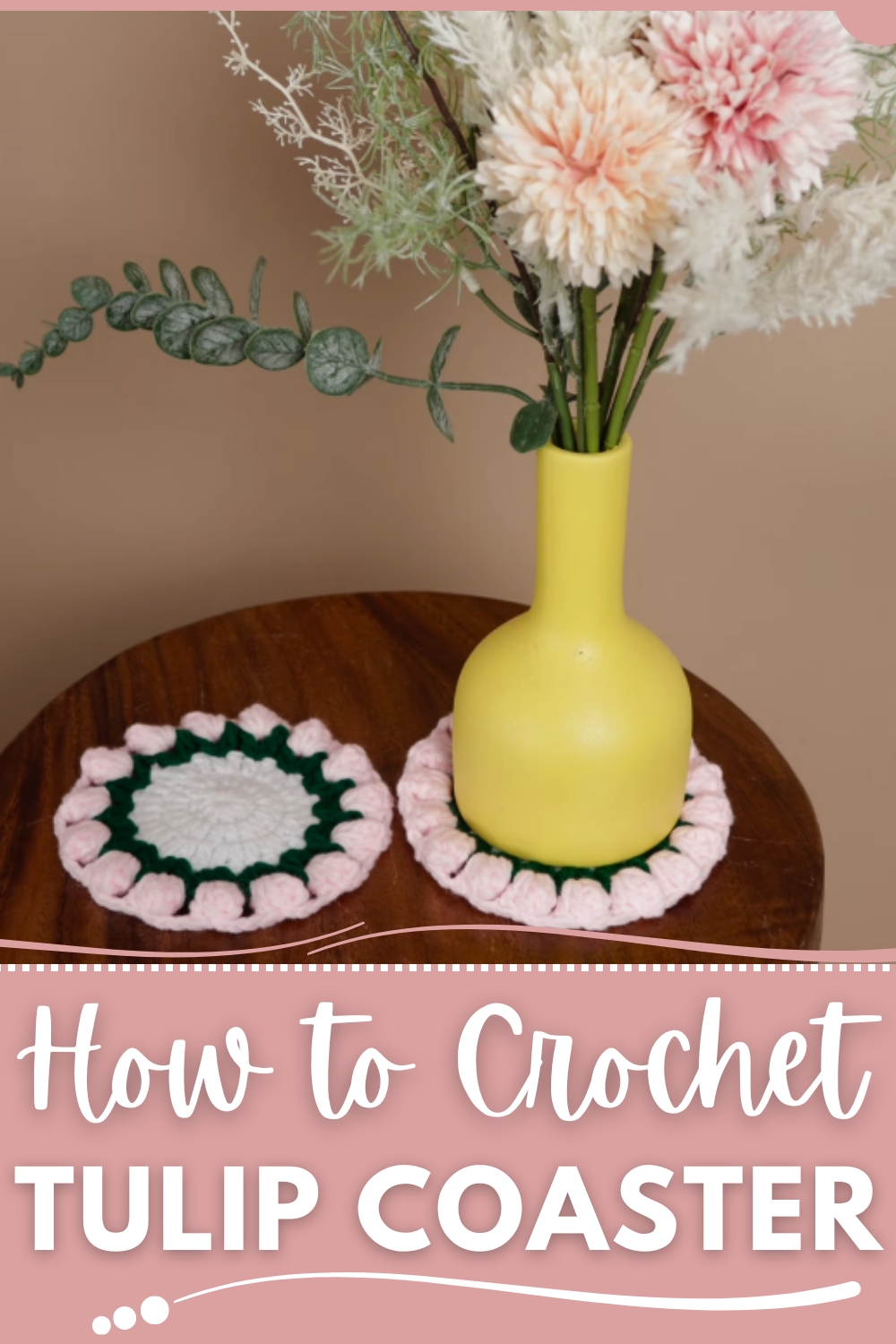
Beyond their visual appeal, tulip coasters serve as a thoughtful gift for loved ones or a personalized accent that makes everyday meals and gatherings feel special. Lightweight yet durable, they combine functionality with sentiment, making them perfect for protecting tables while showcasing a touch of nature-inspired creativity.
A completed crochet tulip coaster is more than a practical item – it's a celebration of art, functionality, and nature. Whether displayed on a coffee table, nestled under a teacup, or gifted to a friend, its charm is bound to leave a lasting impression. It’s a delightful way to pair beauty with everyday use, keeping memories of springtime blooming all year round.
Materials and Tools
- Yarn: You will need two colors of yarn:
- Color A (Flower): A spring color like pink or red for the main tulip petals.
- Color B (Stem/Leaves): Green for the stem and leaves.
- Crochet Hook: The size is not specified but should be appropriate for the yarn weight you choose. A medium-sized hook (e.g., 3.0mm to 4.0mm) is typically suitable for a coaster made with common yarn weights.
- Other Tools: Scissors and a tapestry needle for weaving in ends.
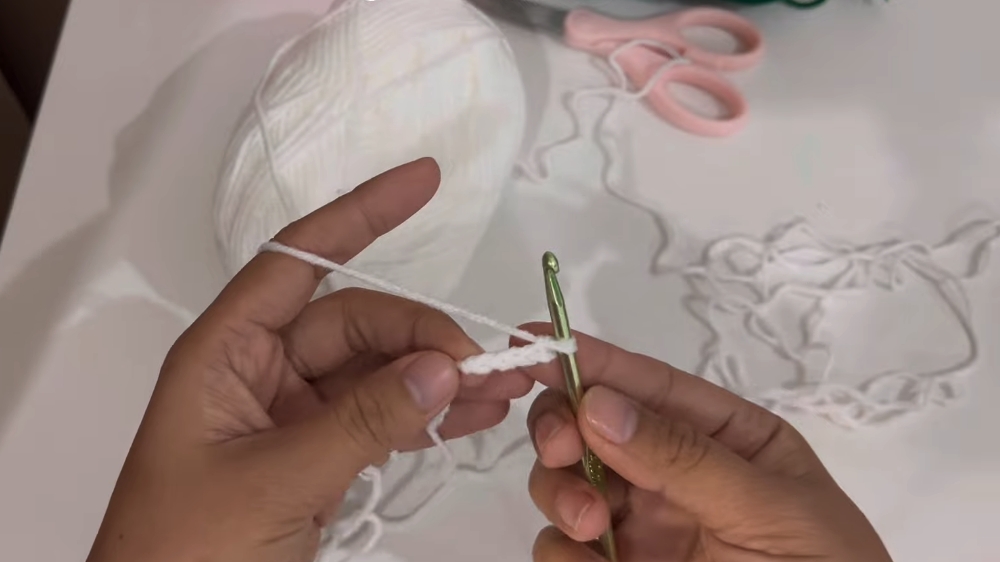
The crocheting process for a tulip coaster involves working in rounds, starting with a simple circle that forms the base.
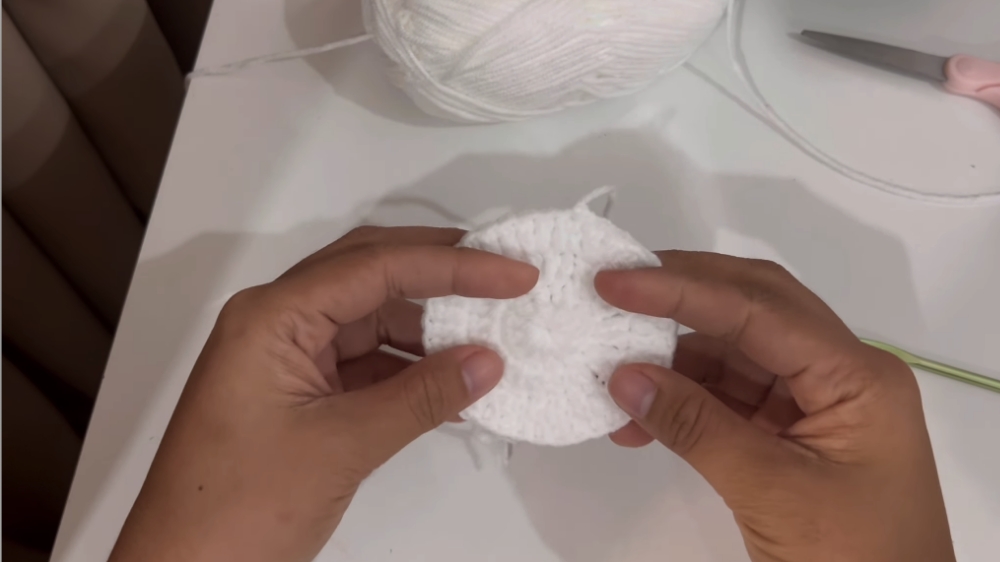
In the early steps, the center of the coaster begins to take shape as the foundation of the tulip’s unique petals starts to emerge. Using carefully balanced stitch work – including chains, double crochets, and slip stitches – the design flows smoothly into the recognizable floral outline.
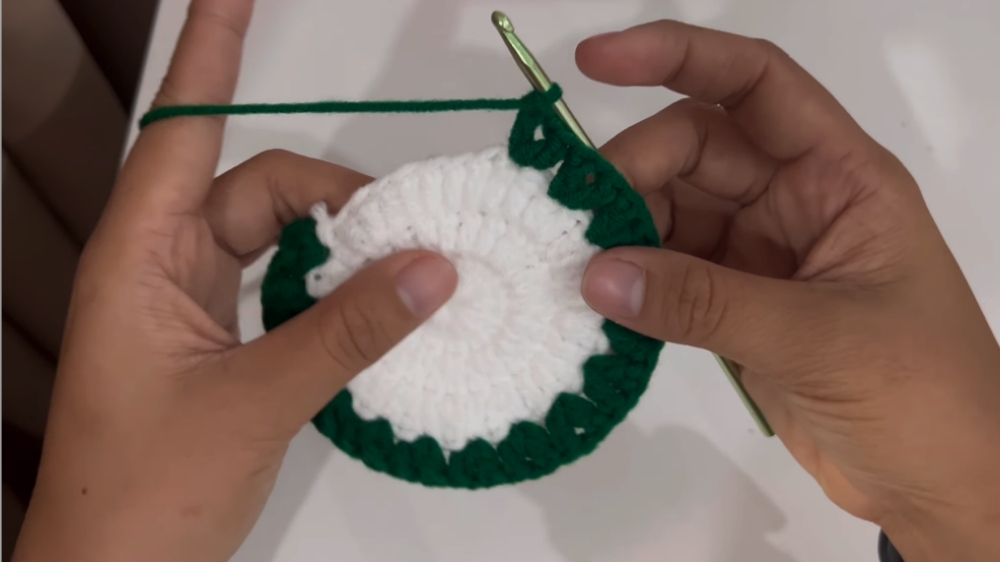
Midway through the pattern, you’ll notice the transformation as each petal unfolds in vibrant, textured detail. The process relies on precision and rhythm, ensuring each stitch builds seamlessly on the last.
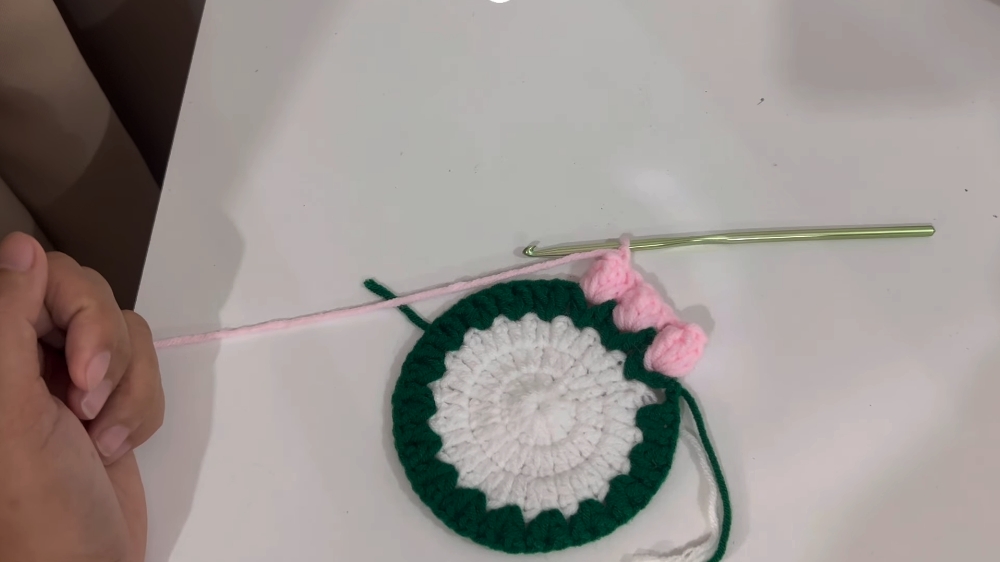
The final touches bring the tulip shape to life, complete with its soft curves and defined edges, creating a harmonious display of craftsmanship.
Difficulty Level
This project is suitable for Intermediate Beginners. While the coaster uses basic stitches (single crochet, half double crochet, double crochet), the pattern involves working in the round, changing colors, and using shell-like clusters (petals) to create the shaping, which requires a basic understanding of reading patterns and stitch placement.
Tutor's Suggestions and Special Features
- Visual-Only Pattern: The pattern is a silent, visual-only demonstration, requiring the viewer to closely follow the movements of the hook and yarn to replicate the pattern.
- Shape and Design: The designers make the coaster in two parts: a flat circular base and the decorative tulip edge, creating a functional yet decorative item.
- Color Customization: The design is versatile and can be customized with various colors for the flower petals (Color A) and leaves (Color B).
Step by Step Guide
This tutorial guides you through crocheting a charming tulip-shaped coaster, perfect for adding a touch of spring flair to your home decor. The pattern is presented visually, set to music, and uses simple stitches to create a base circle and then builds the tulip motifs around the edge.
Conclusion
The tulip crochet coaster is a delightful and unique project that combines basic circular construction with decorative shaping to mimic a ring of blooming flowers. By visually following the pattern and mastering the petal clusters, you can create a beautiful, spring-themed coaster.
Tip
To achieve the best floral effect for the tulips, ensure your tension is tight when creating the petal clusters (Chain 3, DC, HDC, DC) and use a bright, spring color for the flower yarn (Color A). This helps the petals stand out and hold their rounded shape.